
Blog
Follow us - Get quick access to the latest industry news!


2026-09-19 18:39:24
EVA and TPU bags are both lightweight, flexible, and commonly used for storage, protection, packaging, and carrying applications, but they have different material properties. An EVA Rubber Bag is typically made from ethylene-vinyl acetate, a lightweight material known for its flexibility, cushioning, water resistance, and good impact protection. TPU, or thermoplastic polyurethane, is generally more elastic, abrasion-resistant, and durable under repeated bending. The right choice depends on the product being stored, the required level of protection, appearance, flexibility, and operating conditions.
An EVA Rubber Bag is a flexible storage or protective bag manufactured from EVA material. EVA stands for ethylene-vinyl acetate, a copolymer that combines flexibility with relatively low weight and good resistance to moisture.
eva bags are widely used as EVA storage bags, EVA protective bags, and EVA carrying bags because they can help protect products from dust, splashes, scratches, and everyday impact. Depending on the design, an EVA pouch can include zippers, handles, compartments, mesh panels, molded sections, or custom-shaped interiors.
For manufacturers and brands, EVA is also attractive because it can be processed into different shapes, thicknesses, colors, and surface finishes. This makes an EVA pouch bag suitable for both functional packaging and customized product presentation.
TPU stands for thermoplastic polyurethane. It is a thermoplastic elastomer known for its combination of elasticity, strength, abrasion resistance, and flexibility.
TPU bags can be manufactured in different hardness levels and can provide a soft, rubber-like feel while maintaining good mechanical performance. TPU is commonly used when a bag needs to withstand repeated bending, stretching, rubbing, or handling.
Compared with some conventional plastics, TPU can provide excellent flexibility without becoming excessively brittle. This makes TPU bags suitable for applications where repeated movement and long-term material durability are important.
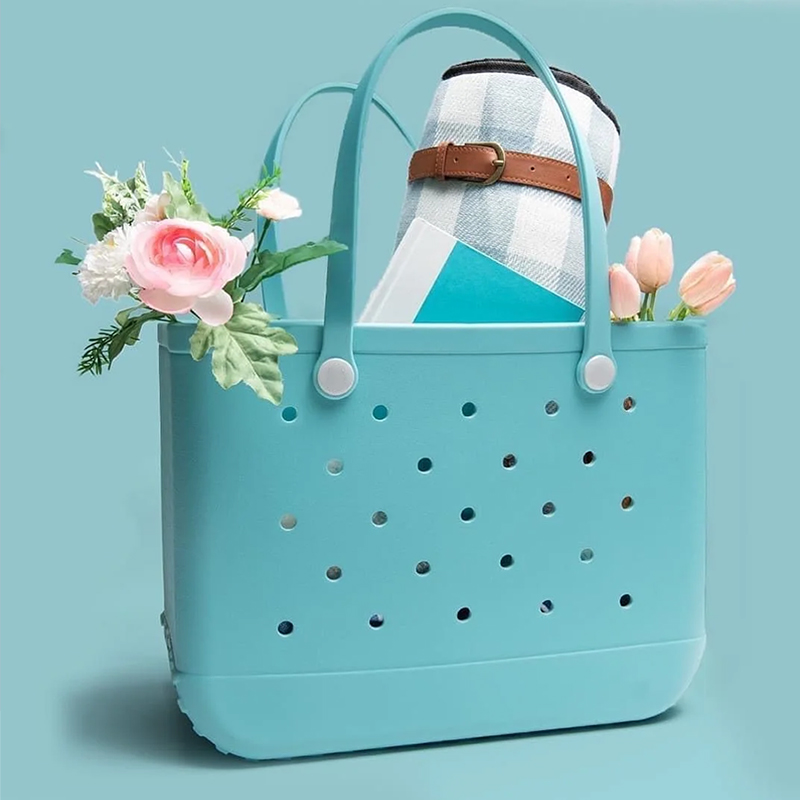
Although EVA and TPU can both be used for flexible bags and pouches, their performance characteristics are different.
EVA is flexible and lightweight, but its flexibility depends heavily on the EVA formulation and hardness. It can provide enough flexibility for everyday carrying and storage while maintaining a certain level of structural support.
TPU is generally more elastic than EVA. It can stretch and recover its shape more effectively, which can be useful for products that require frequent bending or deformation.
An EVA protective bag is often selected when cushioning and impact protection are important. EVA can absorb and distribute certain external forces, making it suitable for carrying electronics, tools, Accessories, and other products that need protection during transportation.
TPU also provides good impact resistance, but its main advantages are often associated with elasticity, abrasion resistance, and flexibility. The actual protection level depends on material thickness, construction, internal padding, and bag design rather than material selection alone.
TPU generally performs well when a bag is exposed to repeated friction and mechanical wear. This makes TPU attractive for demanding applications where the exterior surface may frequently contact other objects.
EVA can also provide good everyday durability, but the performance of an EVA bag depends on its formulation, surface structure, thickness, and manufacturing process.
Both EVA and TPU can provide useful resistance to water and moisture. However, the finished bag's actual water resistance depends on the material, seams, zipper construction, openings, and manufacturing method.
An EVA zipper bag, for example, can help keep dust and moisture away from the contents when combined with an appropriate zipper and well-designed construction. For applications requiring a specific waterproof rating, the complete bag should be tested rather than relying only on the material name.
EVA is well known for being lightweight. An EVA carrying bag can provide a practical balance between protection and portability, which is useful for products that customers need to transport frequently.
TPU can also be lightweight, but the final weight depends on material density, thickness, reinforcement, and overall bag construction.
EVA can be manufactured with different textures, colors, finishes, and structures. It can provide a slightly soft and cushioned feel and can also be formed into semi-rigid protective cases.
TPU commonly provides a smooth, flexible, and rubber-like surface. Depending on the formulation, TPU can be transparent, translucent, or available in different colors.
An EVA bag can be a practical choice when the application requires lightweight protection, cushioning, moisture resistance, and a relatively structured design.
Typical applications include electronics accessories, headphones, cables, medical accessories, cosmetics, tools, sports equipment, travel accessories, and personal care products.
An EVA storage bag is especially useful when products need to remain organized while being protected during transportation. Custom compartments can be added to prevent individual components from moving excessively inside the bag.
TPU may be more appropriate when elasticity, abrasion resistance, and repeated flexing are major requirements. TPU is often considered for applications where the material needs to bend or stretch repeatedly without easily cracking.
For example, TPU can be suitable for flexible protective covers, soft cases, outdoor accessories, and products exposed to frequent handling.
Yes. EVA and TPU can be combined in some product designs to take advantage of their different characteristics.
For example, EVA can provide cushioning and structural support while TPU can be used for flexible edges, protective surfaces, handles, or other areas exposed to repeated movement. A combination of materials can therefore provide a balance between protection, flexibility, appearance, and durability.
When selecting between an EVA pouch and a TPU bag, consider the following factors:
Product type: Determine whether the contents are fragile, rigid, flexible, sharp-edged, or sensitive to moisture.
Protection requirements: Consider impact, dust, moisture, scratches, and pressure during transportation.
Flexibility: Choose EVA when cushioning and structure are important, or consider TPU when greater elasticity and repeated bending are required.
Usage frequency: Frequent opening, closing, folding, and handling can affect material selection.
Size and shape: The dimensions and geometry of the stored product determine the most suitable bag construction.
Customization: Consider custom colors, logos, zippers, compartments, handles, and internal inserts.
For brands and manufacturers, a customized EVA Rubber Bag can be more than a simple storage solution. It can also become part of the product packaging and customer experience.
A customized EVA pouch bag can be designed around the exact dimensions of the product. Internal compartments can keep accessories organized, while a zipper closure can make the contents easier to access. Custom logos, colors, patterns, and surface finishes can also help reinforce brand identity.
For wholesale applications, manufacturers can adjust material thickness, hardness, dimensions, closure systems, and internal structures according to the product requirements.
Neither material is universally better. EVA is often selected for lightweight cushioning, structure, and protective storage, while TPU is commonly chosen for elasticity, abrasion resistance, and repeated flexing. The best material depends on the intended application.
An EVA Rubber Bag can provide good resistance to water and moisture, but it should not automatically be considered completely waterproof. The zipper, seams, openings, and overall construction determine the finished bag's water resistance.
Yes. eva bags can be durable for many everyday storage and carrying applications. Durability depends on EVA formulation, thickness, construction, zipper quality, stitching or bonding, and how the bag is used.
Yes. EVA bags can commonly be customized in size, color, shape, logo, zipper, compartments, handles, surface finish, and internal protection according to product requirements.
The main difference between EVA and TPU bags is their material behavior. EVA is lightweight, flexible, cushioning, and suitable for protective storage, while TPU generally offers greater elasticity, abrasion resistance, and resistance to repeated deformation. An EVA Rubber Bag is a practical solution for products that need lightweight protection, organization, and portability. By considering the product type, protection requirements, usage environment, customization needs, and expected service life, brands and buyers can select the appropriate material and bag construction for their application.



Mobile: +86-135-3230-8701
E-mail:DGluneng001@njdbj.com
Add: 202, Building 1, No. 3, Huangjiang North Bank Fourth Road, Dongguan, Guangdong, China
© 2026 Dongguan Lvneng Rubber And Plastic Products Co., Ltd. All rights reserved.
Privacy policy | Terms and Conditions