
Blog
Follow us - Get quick access to the latest industry news!


2026-09-28 18:02:54
A thermoformed EVA bag is made by heating an EVA foam sheet until it becomes soft enough to shape, forming it over a custom mold, cooling it to retain the desired shape, and then completing the bag through trimming, lamination, stitching, zipper installation, and final assembly. This manufacturing method allows an EVA bag to have a lightweight but structured construction while providing cushioning and protection for the products stored inside.
EVA, or ethylene-vinyl acetate, is widely used for protective bags and cases because it combines flexibility, cushioning, low water absorption, and good shape retention. Depending on the application, manufacturers can adjust the EVA material, thickness, density, hardness, surface finish, and internal structure to produce an EVA bag for electronics, tools, sporting equipment, medical devices, cosmetics, and other products.
A thermoformed EVA bag is a type of protective bag made by using heat to shape EVA foam into a three-dimensional form. Unlike a simple flat pouch made from fabric or flexible sheet material, thermoformed EVA can be molded around a specific shape.
This gives the finished EVA bag a more structured appearance and allows manufacturers to create curved surfaces, recessed areas, reinforced edges, and product-specific internal spaces.
A typical thermoformed EVA pouch may include an EVA shell, outer fabric, inner lining, zipper, handle, elastic straps, mesh pockets, or custom foam inserts. The final construction depends on the product that the bag is designed to store and protect.
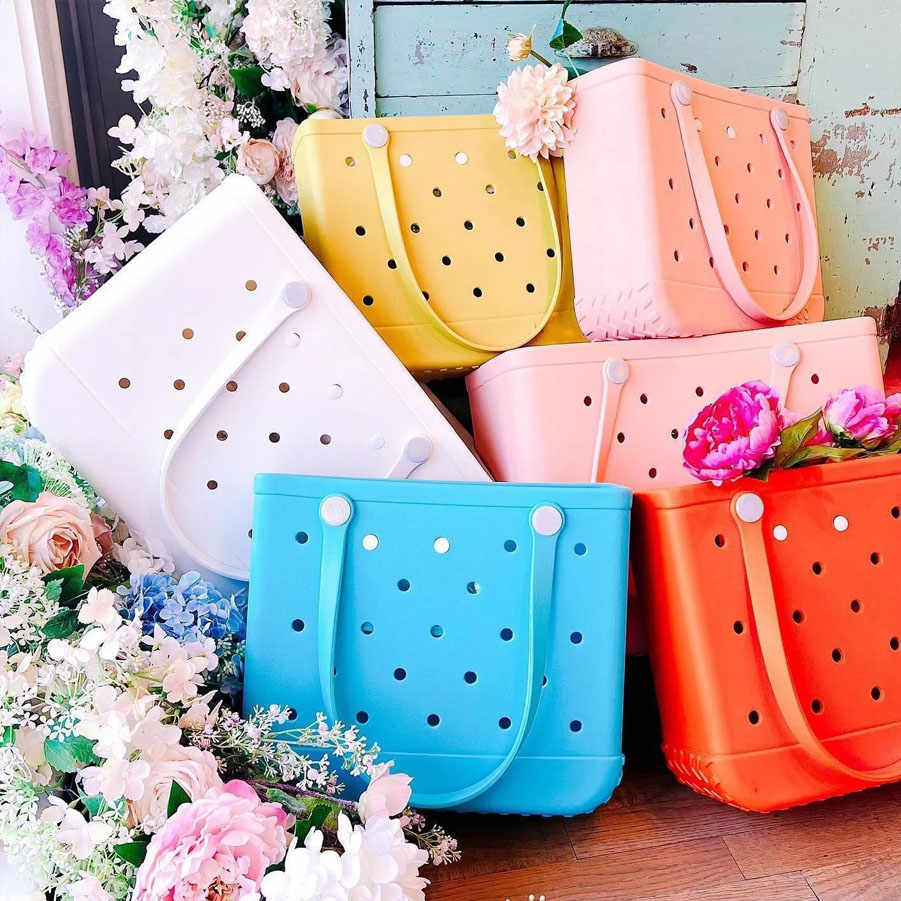
The production process starts with the selection of an appropriate EVA foam sheet. EVA is available in different densities, thicknesses, hardness levels, and formulations, so the material needs to be selected according to the intended application.
A soft EVA material may provide a comfortable cushioning effect, while a higher-density or firmer EVA material can provide greater structural support. For a protective case used for sensitive electronics, for example, the manufacturer may need to balance cushioning with dimensional stability.
The thickness of the EVA sheet is also important. A thicker sheet does not automatically mean better protection. The correct thickness depends on the size and weight of the product, the required flexibility, the shape of the mold, and the level of protection expected from the finished EVA protective bag.
Before production begins, the manufacturer develops the bag structure and mold according to the dimensions of the intended product.
At this stage, designers consider the overall length, width, height, corner radius, opening, zipper position, internal clearance, wall thickness, and product placement. If the bag is intended for a specific product, the internal cavity can be designed to follow the product's shape.
Mold design is particularly important in thermoforming because the mold determines the three-dimensional shape of the EVA shell. A poorly designed mold can result in uneven thickness, unwanted deformation, poor fitting, or difficulty during assembly.
For customized eva bags, manufacturers may use product samples, technical drawings, CAD models, or three-dimensional data to develop the mold.
Once the material and mold have been prepared, the EVA sheet is heated under controlled conditions.
Heating makes the EVA soft and flexible enough to conform to the mold. The required processing conditions depend on the EVA formulation, material thickness, density, equipment, and product design.
Temperature control is important during this stage. If the material does not reach a suitable forming condition, it may not reproduce the mold accurately. Excessive heat can also affect the material and lead to unwanted deformation or changes in its physical properties.
For this reason, manufacturers normally establish suitable processing parameters through testing and production trials rather than relying on one fixed temperature for every EVA product.
After heating, the softened EVA sheet is placed against the mold and formed into the required shape.
Depending on the equipment and manufacturing method, controlled pressure or vacuum can be used to help the material conform to the mold surface. The EVA gradually takes the shape of the mold, creating the structured shell required for the finished bag.
This is the key stage that distinguishes a thermoformed EVA bag from a simple flat EVA pouch.
The forming process can create curved corners, recessed sections, raised areas, and other customized features. These features can also help the finished bag fit the product more securely.
After the EVA has been formed, it needs to cool while maintaining the required shape.
Cooling allows the material to stabilize around the mold. Once the EVA has sufficiently cooled, it can be removed from the mold and inspected.
Controlling the cooling process is important because premature removal or uneven cooling may contribute to dimensional changes. For products requiring precise fitting, dimensional stability is particularly important.
Thermoforming normally leaves excess material around certain areas of the molded sheet. This material is trimmed to create clean and consistent edges.
The trimmed EVA shell can then be prepared for further manufacturing processes. Depending on the product design, this may include bonding, lamination, stitching, zipper installation, or the addition of internal components.
At this stage, manufacturers may also inspect the shell for surface defects, deformation, uneven edges, and dimensional accuracy.
A finished EVA pouch bag is usually more than a molded piece of foam.
Many EVA bags combine the molded EVA shell with polyester, nylon, PU, or other exterior materials. These materials can improve the appearance and provide additional abrasion resistance.
The interior may include a soft lining to reduce direct contact with the stored product. Depending on the application, the bag can also include elastic straps, mesh pockets, Dividers, molded cavities, or removable inserts.
Zippers are another important component. For a frequently used EVA carrying bag, the zipper needs to operate smoothly while maintaining the desired level of durability.
One of the main advantages of thermoformed EVA is customization.
A manufacturer can develop an EVA storage bag around the actual dimensions and shape of the product. Instead of leaving a large empty space inside the bag, the internal structure can be designed to hold the product more securely.
For example, a headphone case may include a shaped cavity for the headphones and a separate compartment for cables. A camera bag may have dedicated spaces for the camera body, lenses, batteries, and Accessories. A tool case may use multiple molded compartments to keep individual tools separated.
This approach can reduce unnecessary movement inside the bag and make the storage system more organized.
Quality control is carried out throughout the production process rather than only after final assembly.
Manufacturers may check the incoming EVA material, sheet thickness, density, appearance, molded dimensions, surface quality, zipper operation, stitching, bonding, and final product fit.
For a custom EVA protective bag, the fit between the bag and the product is particularly important. A bag that is too tight may make the product difficult to insert or remove, while excessive internal space may allow unnecessary movement during transportation.
Thermoformed EVA bags are used in many applications where lightweight protection and structured storage are required.
Common applications include headphones, earphones, cameras, portable electronics, gaming accessories, medical equipment, tools, cosmetic devices, sporting products, outdoor equipment, and industrial components.
The material and construction can be adjusted according to the requirements of each application, which makes thermoformed EVA suitable for both consumer products and B2B protective packaging.
When developing a custom EVA bag, it is useful to provide the manufacturer with accurate product dimensions or a physical sample.
Other important considerations include EVA thickness, density, hardness, outer fabric, lining, zipper type, handle design, internal compartments, logo placement, color, production quantity, and intended use.
The manufacturer can then determine an appropriate structure for the EVA protective bag instead of simply selecting a standard size.
Yes. Thermoforming allows EVA material to be shaped into different three-dimensional forms. The final shape depends on the material, mold design, processing conditions, and product requirements.
Yes. Dimensions, shape, color, surface materials, internal inserts, zipper configuration, handles, compartments, and branding can all be customized depending on the manufacturing process.
EVA itself has relatively low water absorption, but a finished bag should not automatically be considered completely waterproof. Zippers, seams, stitching, openings, and outer materials can affect the overall water resistance of the finished product.
The terms can overlap. An EVA pouch usually refers to a smaller storage or carrying product, while EVA bag is a broader term that can include soft, semi-rigid, and thermoformed protective bags.
Making a thermoformed EVA bag involves material selection, product design, mold development, controlled heating, forming, cooling, trimming, and final assembly. Each stage affects the appearance, dimensions, durability, and protective performance of the finished product.
For brands and manufacturers looking for a lightweight but structured storage solution, thermoformed EVA can provide a practical balance between cushioning, shape retention, customization, and portability. With the right material and mold design, an EVA bag can be developed specifically for the product it is intended to carry.



Mobile: +86-135-3230-8701
E-mail:DGluneng001@njdbj.com
Add: 202, Building 1, No. 3, Huangjiang North Bank Fourth Road, Dongguan, Guangdong, China
© 2026 Dongguan Lvneng Rubber And Plastic Products Co., Ltd. All rights reserved.
Privacy policy | Terms and Conditions