
Blog
Follow us - Get quick access to the latest industry news!


2026-09-28 18:05:39
eva bags protect their contents by combining cushioning, impact absorption, structural support, and product stabilization. EVA foam, made from ethylene-vinyl acetate, has a lightweight cellular structure that can help absorb mechanical impact while providing a protective barrier around the stored product.
Unlike a simple fabric pouch, an EVA bag can be designed with a semi-rigid structure and customized internal compartments. This allows the bag to do more than simply hold a product. It can help reduce movement, cushion impacts, protect surfaces from scratches, and provide additional resistance against everyday handling and moisture exposure.
The actual protection provided by an EVA bag depends on its material density, thickness, hardness, construction, internal inserts, lining, zipper, and how closely the bag is designed around the product.
EVA is widely used in protective products because it combines several useful characteristics in one material.
It is relatively lightweight, flexible, resilient, and available in different densities and hardness levels. This gives manufacturers flexibility when designing an EVA pouch, EVA carrying bag, or larger protective case.
EVA foam also has a closed-cell structure. Compared with many open-cell foams, closed-cell EVA generally absorbs less water, which can make it useful in products where exposure to humidity or occasional splashes is a concern.
However, the performance of the final EVA protective bag depends on the entire construction rather than EVA material alone.
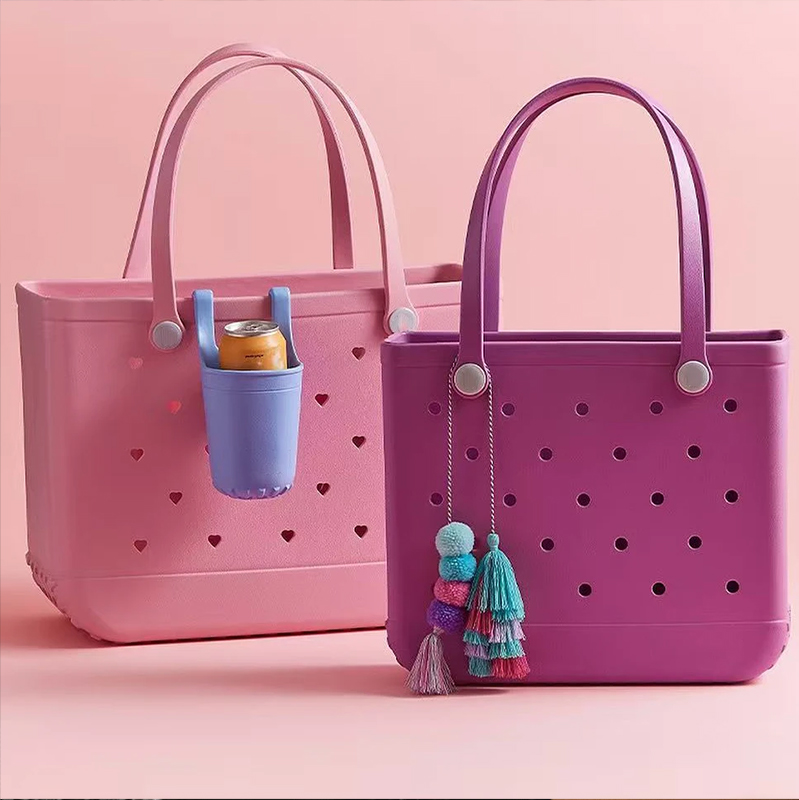
Impact protection is one of the most important functions of an EVA bag.
When a bag is dropped or receives an external impact, the EVA material can deform and absorb part of the mechanical energy. Instead of transferring all of the force directly to the product, the EVA layer acts as a cushioning barrier.
This can be particularly useful for portable electronics, headphones, cameras, measuring equipment, tools, and other products that may be damaged by repeated impact.
The amount of protection depends on the EVA formulation, thickness, density, product weight, bag structure, and internal design. A thicker EVA layer is not automatically the best choice for every application.
Cushioning is closely related to impact absorption, but the two functions are not exactly the same.
The EVA layer creates a buffer between the product and the outside environment. If the bag is placed on a hard surface, the EVA material provides a softer layer between the surface and the product.
Inside the bag, additional EVA foam can be used around sensitive areas. This is common in custom EVA protective bags designed for electronic equipment and precision products.
The cushioning effect can be adjusted by changing the thickness, density, and geometry of the EVA structure.
External impact is only one source of potential damage. Products can also be damaged when they move around inside a bag.
For example, if an electronic device is stored in a bag that is significantly larger than the device, it may move back and forth during transportation. Accessories stored in the same compartment may also come into contact with the product.
A customized EVA storage bag can solve this problem by using molded cavities, foam inserts, elastic straps, Dividers, or mesh pockets.
The goal is to keep the product in a stable position while still allowing the user to remove it easily.
Some EVA bags are thermoformed to create a defined three-dimensional shape.
This structure can help the bag maintain its form instead of collapsing around the contents. The semi-rigid shell can provide an additional barrier between the product and external pressure.
This is especially useful when the bag is placed inside a backpack, Suitcase, shipping carton, or other storage environment where other objects may press against it.
Thermoformed construction also allows manufacturers to create product-specific shapes, making it possible to combine external structural support with customized internal cushioning.
Yes. An EVA bag can help reduce the risk of surface scratches when the product is properly separated from harder surfaces.
Many EVA pouch bags include a soft inner lining. The lining provides a smooth contact surface between the bag and the stored product.
For products with painted, polished, coated, or easily marked surfaces, the combination of EVA cushioning and a soft lining can provide an additional layer of everyday protection.
Internal compartments are also useful because they prevent accessories from repeatedly rubbing against the main product.
EVA has relatively low water absorption because of its closed-cell structure. This makes EVA useful in applications where the bag may encounter humidity, condensation, or occasional splashes.
However, an EVA bag should not automatically be described as waterproof.
The zipper, stitching, seams, openings, outer fabric, and bonding methods can all influence how much water can enter the finished bag. If a product requires a specific waterproof rating, the entire bag construction needs to be designed and tested for that requirement.
The internal structure is one of the most important parts of a protective EVA bag.
A basic EVA pouch may provide cushioning around the product, while a custom EVA protective bag can use molded inserts that follow the exact shape of the product.
For example, a camera case can have a dedicated cavity for the camera body and separate areas for lenses and accessories. A headphone case can provide space for the headphones, charging cable, and other components. A tool case can include individual cavities for different tools.
This approach improves organization while also reducing unnecessary movement inside the bag.
A fabric bag can provide lightweight storage and basic protection, but its structure generally depends on the fabric, padding, and internal construction.
An EVA bag can incorporate the protective characteristics of EVA foam directly into the structure. This can provide greater shape retention and cushioning without requiring a completely rigid hard case.
| Feature | Fabric Bag | EVA Bag |
|---|---|---|
| Shape retention | Usually flexible | Can be semi-rigid or molded |
| Cushioning | Depends on padding | Provided by EVA structure |
| Custom molded shape | Limited | Available with thermoforming |
| Product-specific inserts | Possible | Highly customizable |
| Water absorption | Depends on fabric and coating | EVA generally has low water absorption |
Neither option is automatically suitable for every application. The right choice depends on the product, transportation conditions, required protection, appearance, weight, and budget.
EVA bags are used for many products that need lightweight protection during transportation and storage.
Common examples include headphones, earphones, cameras, portable electronics, gaming accessories, tools, medical equipment, cosmetic devices, sporting goods, outdoor equipment, and industrial components.
For frequently transported products, an EVA carrying bag can provide a practical combination of portability and protection.
The right EVA bag should be selected according to the product rather than simply its appearance.
Consider the product's dimensions, weight, fragility, surface finish, and intended transportation environment. It is also important to determine whether the product needs impact protection, compression resistance, moisture resistance, scratch protection, or simply organized storage.
For custom projects, manufacturers can use the product dimensions, drawings, 3D files, or physical samples to develop an appropriate EVA structure.
The EVA thickness, density, hardness, internal cavity, lining, zipper, and outer material can then be selected according to the intended application.
Yes. EVA bags are commonly used for electronics because EVA can provide cushioning, impact absorption, structural support, and a lightweight protective layer.
An EVA bag can help reduce the force transferred to the contents during everyday impacts, but its actual drop protection depends on the complete design, including EVA thickness, density, internal inserts, and product fit.
Not necessarily. EVA itself has low water absorption, but the finished bag can still allow water to enter through zippers, seams, stitching, or openings. Waterproof performance requires the complete construction to be designed for that purpose.
Yes. Custom EVA bags can be designed around specific product dimensions and can include molded cavities, foam inserts, compartments, straps, pockets, and other internal structures.
An EVA protective bag is used to store and transport products that need additional protection against impact, scratches, movement, and everyday handling. Common applications include electronics, tools, cameras, sporting products, and medical equipment.
EVA bags protect their contents through a combination of cushioning, impact absorption, structural support, product stabilization, and moisture resistance. The EVA material creates a protective barrier around the product, while custom internal inserts can keep individual components securely positioned.
For products that require more than basic storage, a customized EVA protective bag can provide a useful balance between protection, weight, portability, and appearance. Whether the product needs a compact EVA pouch, an EVA storage bag, or a structured thermoformed case, the final protection depends on choosing the right material and designing the entire bag around the intended application.



Mobile: +86-135-3230-8701
E-mail:DGluneng001@njdbj.com
Add: 202, Building 1, No. 3, Huangjiang North Bank Fourth Road, Dongguan, Guangdong, China
© 2026 Dongguan Lvneng Rubber And Plastic Products Co., Ltd. All rights reserved.
Privacy policy | Terms and Conditions